
Namibia: The Oldest Desert and Its Unique Cultures
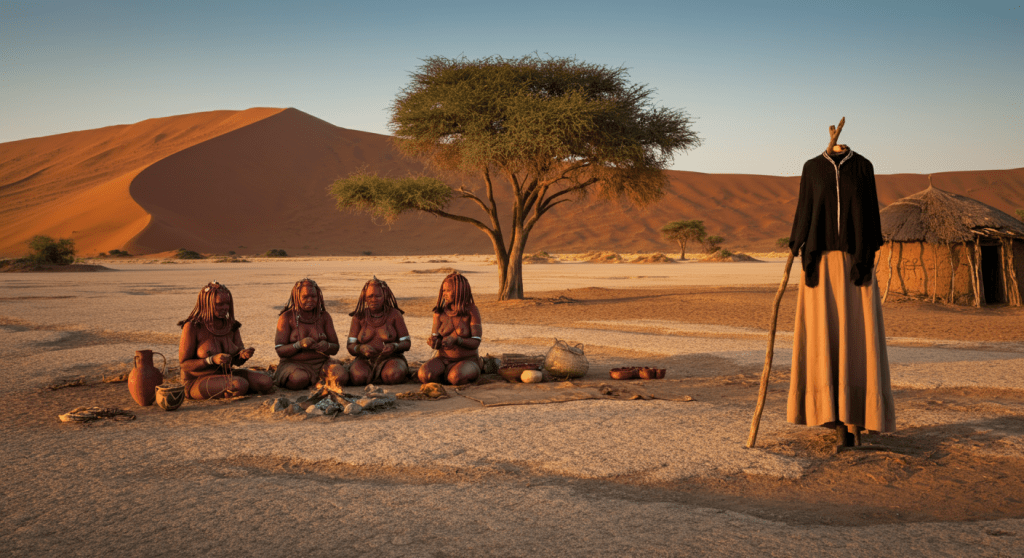
Namibia is a land where time seems to stand still, and the wind sculpts stories into sand, carving waves across the towering red dunes of Sossusvlei. Once home to the San (Bushmen) and Nama peoples, Namibia holds one of the oldest living cultures on Earth, deeply connected to the land and its rhythms. Though colonized by Germany and later ruled by South Africa, Namibia gained its independence in 1990 and has since proudly reclaimed its unique identity. In Etosha National Park, herds of zebras, elephants, and oryx gather around shimmering salt pans, offering a wildlife spectacle against a stark, cinematic backdrop. To the west, the Skeleton Coast feels like another planet — with shipwrecks half-buried in fog, where desert meets the sea in ghostly harmony. Namibia is also home to the Himba people, known for their ochre-covered skin, braided hair, and nomadic traditions passed down for centuries.
“What glows on our skin is not fashion, it is protection, prayer, and pride.”
– TZAQOL
Fun Fact!
Namibia has one of the lowest population densities in the world, making its wide, open landscapes feel almost sacred in their solitude.
In the artsy town of Swakopmund, colonial-era architecture meets surf culture and dune adventures, offering a quirky, cross-cultural escape. The Namib Desert is thought to be over 55 million years old, making it the oldest desert on the planet — and its golden light attracts photographers from across the globe. With its mix of ancient culture, surreal terrain, and untouched wilderness, Namibia isn’t just a place to visit — it’s a place to stand still and feel the earth breathe.
 Wear the World. Celebrate Culture - TZAQOL
Leave a comment