
Suriname: Nature’s Archives and Culinary Wonders
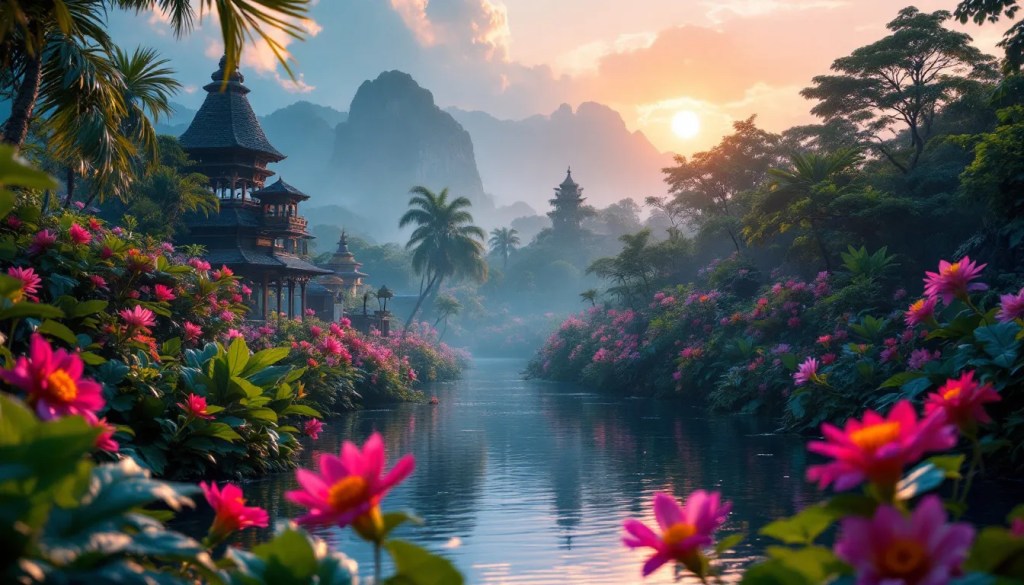
Suriname is a country where rivers carry memory, and every voice adds to a symphony of cultural rhythm. In its capital, Paramaribo, colonial Dutch buildings sit beside mosques, temples, synagogues, and churches — a city built in harmony, not hierarchy. The language is a mosaic too — Sranan Tongo, Dutch, Javanese, Hindi, and Indigenous tongues float through open markets and neighborhood streets. In the rainforests of the interior, Maroon communities, descendants of escaped enslaved Africans, preserve oral histories, drum ceremonies, and healing traditions passed through generations. Alongside them, Indigenous Lokono and Trio people maintain deep relationships with the land — their art etched in wood, body paint, and ritual.
“This country is a quiet song made from many drums.”
– TZAQOL
Fun Fact!
Suriname is the most forested country on Earth — with over 90% jungle, it’s a living archive of biodiversity and balance.
The cuisine is like its people: bold and blended — where roti meets cassava, and satay dances with pom. Festivals like Holi Phagwa, Keti Koti, and Eid are celebrated across communities with shared joy. Suriname doesn’t feel like one place — it feels like many stories spoken through one voice. It is a country that doesn’t shout to be heard — it sings softly in every direction.
 Wear the World. Celebrate Culture - TZAQOL
Leave a comment