
Haiti: Painted Walls, Ancestral Rhythm, and the Spirit of Freedom
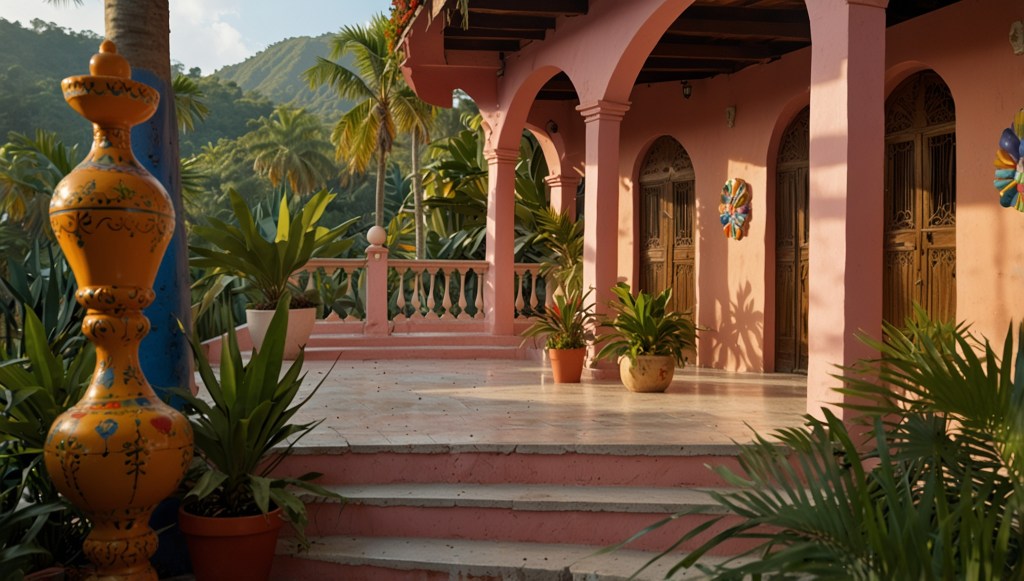
Haiti is the world’s first Black republic — a nation born from revolution, shaped by resistance, and sustained through art, rhythm, and reverence. Its culture blends African roots, Taino influence, and French colonial legacy into a spiritual and creative force unlike any other. Vodou is not a superstition here — it’s a sacred language of ancestors, spoken through drums, altars, and ceremonial dance. In Jacmel, murals and papier-mâché masks line the streets in bursts of color and protest, especially during Kanaval. The iron sculptors of Croix-des-Bouquets transform discarded metal into celestial spirits, trees of life, and protectors of the soul.
“In Haiti, the drum remembers what history tried to erase.”
– TZAQOL
Drapo Vodou (Vodou flags) are hand-sequined artworks, shimmering with the symbols of spirits and prayers stitched in beads.
The lakou (communal courtyard) remains central to Haitian rural life — a place of storytelling, drumming, cooking, and ceremony. Haitian cuisine, from griot to soup joumou, is a celebration of resilience and togetherness, often prepared for sacred holidays and remembrance. Oral tradition carries the strength of revolution through krik-krak tales — where one call opens the portal to ancestral memory. From Port-au-Prince to the mountains of Artibonite, resistance is not just remembered — it is sung, painted, and worn. In Haiti, heritage is not a performance — it’s a living, drumming, beaded truth.
 Wear the World. Celebrate Culture - TZAQOL
Leave a comment