
Desert Echoes: Experience Morocco’s Heritage
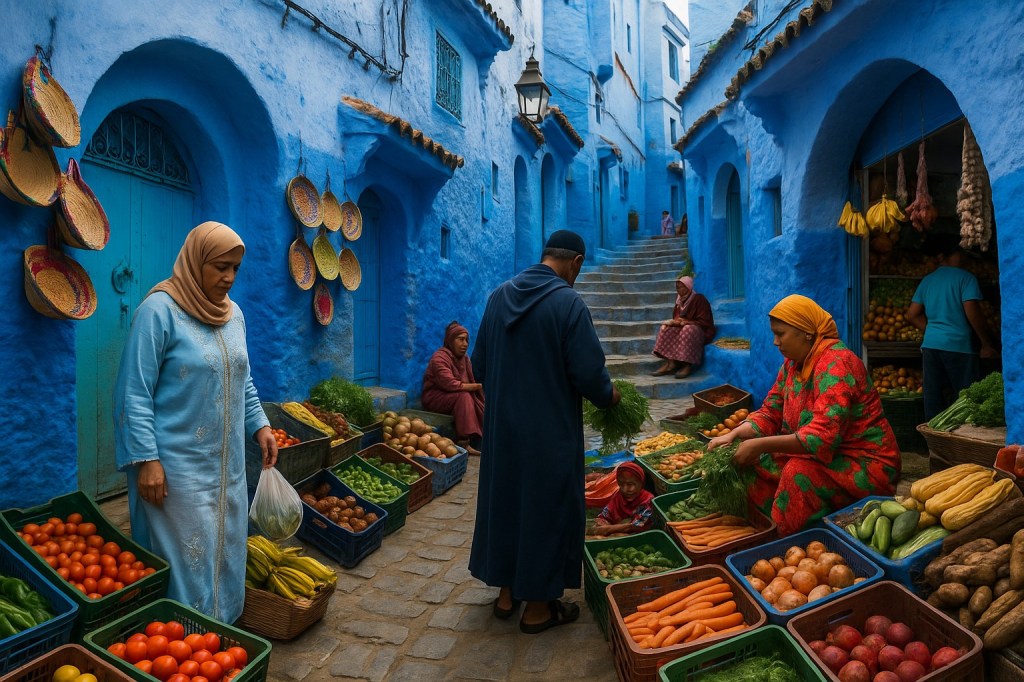
Morocco is a crossroads of African, Arab, and Berber cultures — a country where mosaic tiles, oral proverbs, and sacred music blend into everyday life.
The ancient medinas of Fez, Marrakech, and Chefchaouen are filled with winding alleys, painted doors, and markets bursting with spices, brass, and carpets. The Amazigh (Berber) people preserve rich traditions of tattooing, weaving, and silverwork, particularly in the Atlas Mountains. In the Sahara, desert communities gather for gnawa ceremonies — rhythmic rituals rooted in healing, spirituality, and ancestral reverence.
Moroccan architecture is known for its zellige tilework, carved wood, and riad courtyards where water and shade create sanctuaries of peace.
The country’s textiles — from kilim rugs to haik wraps — are woven by hand, dyed with natural pigments, and often passed through generations. Mint tea is more than a drink — it’s a symbol of hospitality and storytelling, poured high and sweet as a gesture of welcome. Traditional djellabas and kaftans are worn during weddings and festivals, embroidered with gold thread and often layered with jewelry and henna. The call to prayer echoes alongside the sound of flutes and drums in Sufi gatherings, where trance and devotion blur into one. Cultural festivals like Mawazine and the Gnaoua Festival of Essaouira celebrate the nation’s musical diversity and ancestral pride. In Morocco, heritage is layered — in stone, in scent, in cloth — always alive and woven with purpose.
 Wear the World. Celebrate Culture - TZAQOL
Leave a comment